
AZ Plug Valves: free of cavities and maintenance


Technical Comparison: Cavity-Free AZ Plug Valve vs Ball Valve
AZ Plug Valve: The Design Principle
Key Advantages
- free of cavities
- no contamination of process media
- adjustability of the plug and sealings
- maintenance-free due to self-lubricating and chemical-resistant PTFE-sleeve
- low emission design
- constant torque (Δp independent !)
- vacuum-capable

Tapered plug
- plug pressed into the PTFE-sleeve
- polished surface
PTFE-sleeve:
- mechanically locked into the valve body
- complete PTFE chambering
- robust, one-piece sleeve covers and protects the entire plug
Body
- tapered body interior
- integrated supporting ribs avoid rotation and coldflow of the sleeve
- large sealing surface
Reduced and full bore design
Executions & Design variants
Reduced bore
Type STANDARD

- compact valve (FF / weight)
- optimal torques for economic automation
Full round bore
Type EXTRA

- maximum flow rate
- minimal pressure drop
- piggable (optional)
Type ISO-EXTRA

Picture: Type ISO-EXTRA
- excellent for abrasive, slurry and solid-containing applications
- maximum flow rate compared to other valve types with the same nominal size
Maximum flow rate

Options
Multi-port

- whole range of multi-port plugs for all configurations (up to 7-way)
- horizontal and vertical installation
Vented options
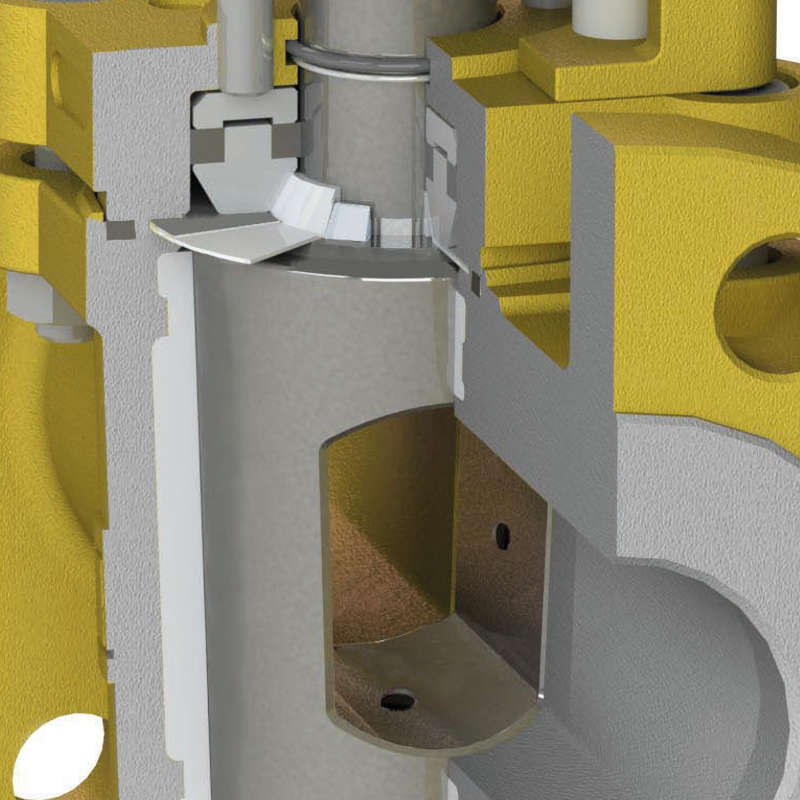
- plug bottom
- plug upstream / downstream automatic pressure balance in case of thermal media expansion
System requirements

- FDA = Food and Drug Administration certifications and compliant materials
- GMP = Good-Manufacturing-Practice
- CIP = Clean-in-Place
- Polished internal surfaces, surface finish <0.8 Ra μm (<32 Ra μin)
- oil and grease free
- water-free
All connections possible

- flanges acc. to DIN, ASME, JIS etc.
- welded ends
- screwed and threaded ends
- combinations of connections
- oversize flanges
- compression fittings and ferrule ring couplings
- special connections
High and low temperature

- extended bonnet with sealing at the top
- stem extension for insulated valves